What Is a Medicaid Asset Protection Trust in Minnesota? (MAPT Explained for 2026)

A Medicaid Asset Protection Trust Minnesota is a legal planning tool that may help Minnesota residents protect their home and savings while still qualifying for medical assistance.
If you’ve started researching how to protect your home or savings from the high cost of long-term care, you’ve probably come across something called a Medicaid Asset Protection Trust (MAPT). For many Minnesota families, it can be an effective planning tool, but it’s not the right solution for everyone. The key is understanding your options early so you can make informed decisions for yourself and your family.
It is one of several options available to families who want to plan ahead, and whether it is the right fit depends heavily on your specific situation. Understanding what a MAPT can and cannot do, and starting early, is what makes the difference.
A MAPT is one tool in a larger Medicaid planning toolkit. It is not the right fit for every family, and in many cases other strategies including a Medicaid Compliant Annuity may be more effective.
The goal is finding the approach that fits your situation, not fitting your situation into one approach.
Why Minnesota Families Look Into Medicaid Asset Protection Planning
Long-term care in Minnesota is expensive.
A private nursing home room can cost over $200,000 per year. Most families cannot pay that out of pocket for long.
Medical assistance can help cover those costs, but qualifying is not simple.
That’s why many families seek guidance from an experienced Medicaid planning attorney before making financial decisions that could affect their options later.
To be eligible as a single applicant, you generally must have:
- Assets below $3,000 for a single person
- Monthly income below $1,305
- Have a medical need for care documented by the MNChoices Assessment that care is needed. A documented medical need for long-term care
For most middle-class families, the asset limit is where things get complicated.
A home, a retirement account, and modest savings can easily put someone well above that threshold.
Without a plan in place, families may be forced to spend down nearly everything before help kicks in.
For many families, that’s where a MAPT may help. When used in the right circumstances, with the help of an experienced elder law attorney, it can become part of a larger plan to preserve assets while preparing for future care needs.
How a Medicaid Asset Protection Trust Minnesota Works
A MAPT is an irrevocable trust, meaning that once you transfer assets into it, you give up ownership of those assets, and you cannot take them back. That transfer is what makes them potentially “unavailable” under Medicaid rules, which may allow Medical Assistance to exclude them when calculating your eligibility.
Step 1: The Trust Is Created
One of our experienced elder law attorneys drafts the trust document. You are the grantor (the person who creates and funds the trust). A trusted adult, often one of your children, typically serves as the trustee. Your heirs are named as beneficiaries.
Step 2: Assets Are Transferred Into the Trust
Common assets placed in a MAPT may include:
- Your primary home
- Vacation or investment property
- Bank accounts and savings
- Non-retirement investments
It’s important to note that retirement accounts like IRAs and 401(k)s are generally not placed in a MAPT and are treated differently under Minnesota Medical assistance rules.
Step 3: The 5-Year Lookback
Minnesota Medical assistance reviews any asset transfers made in the 60 months before you apply.
If assets were moved into a MAPT and you applied for Medical assistance within that window, those assets could still be counted and a penalty period may apply.
This is why early planning matters so much.
The sooner a MAPT is created, the sooner that 5-year clock starts running.
If care is needed before the five-year waiting period ends, there may still be other planning strategies available.
That’s why it’s important to work with an elder law attorney who understands the full range of Medicaid planning options.
Step 4: After the 5-Year Period Passes
If you apply for Medical Assistance after the full 5-year lookback period has passed, the assets held in the MAPT may no longer be counted against you so long as all of the detailed rules were followed.
In that case, you could qualify for Medical assistance to help cover care costs while preserving those assets for your family.
Minnesota Law and the 2021 Court of Appeals Decision
Minnesota’s Medicaid Asset Protection Trusts history is complicated, and understanding that history is part of why working with a knowledgeable attorney matters.
In 2005, a Minnesota statute went into effect that essentially treated irrevocable trusts as “revocable” for medical assistance eligibility purposes, meaning assets inside them were still counted against applicants.
For years, this made MAPTs a difficult and uncertain planning tool in this state.
That landscape shifted after the 2021 Geyen Minnesota Court of Appeals decision in which the court ruled that Minnesota’s statute conflicted with federal Medicaid law.
The court found that federal law, which treats assets in a properly structured irrevocable trust as unavailable for eligibility purposes, takes precedence.
As a result, Minnesota county workers were directed to evaluate irrevocable trusts under federal law only, restoring the MAPT as a potentially viable planning tool in Minnesota.
Our team has been closely involved in Medicaid planning throughout these legal changes.
In fact, Attorney Michael Teeter contributed to the legal brief in the 2021 Court of Appeals case that helped clarify how irrevocable trusts are treated under Minnesota Medicaid law.
That experience allows us to help families evaluate not only when a MAPT makes sense, but when another strategy may better accomplish their goals.
After the Geyen decision was issued, Minnesota’s Department of Human Services issued their requirements for Medicaid Asset Protection Trusts in Minnesota, which are significantly more restrictive than other states.
Those rules make MAPT drafting in Minnesota more challenging, and the trusts less attractive for many clients.
Because Minnesota’s rules are more restrictive than many other states, it’s especially important to receive advice that’s specific to Minnesota law, not generic information you may find online.
Can I Still Live in My Home if I Put it in a MAPT?
This is one of the most common questions families ask. In most states, the answer is often yes. In Minnesota, it is sometimes yes.
When a home is transferred into a MAPT, the grantor typically retains the right to live in the home for the rest of their life.
This is sometimes called a life estate or a retained use right.
When the grantor passes away, the home may pass directly to the beneficiaries named in the trust, rather than going through probate or being subject to a Medical assistance estate recovery claim.
Like every estate planning strategy, there are advantages and trade-offs.
Our role is to help you understand both so you can make the decision that’s right for your family.
Transferring your home into a MAPT is treated as a gift for tax purposes, which means your heirs may lose the step-up in cost basis they would otherwise receive if the home passed to them at your death.
That step-up in basis can significantly reduce capital gains taxes when heirs eventually sell the property.
Whether the Medicaid protection is worth that trade-off depends on your family’s specific financial situation, and it is one of the key reasons this decision should not be made without guidance from an experienced elder law attorney.
There are trade-offs worth understanding before moving forward:
- You would no longer hold direct title to the home
- Selling or refinancing would require trustee involvement
- Any proceeds from a sale would remain inside the trust
These are details worth walking through carefully with an experienced MAPT attorney before moving forward.
Frequently Asked Questions About MAPTs in Minnesota
How does a Medicaid Asset Protection Trust work in Minnesota?
A MAPT transfers assets out of your name into an irrevocable trust. After a 5-year waiting period, those assets may no longer count against you when you apply for Medical Assistance to help cover long-term care costs. See the step-by-step section above for a full walkthrough.
Can I put my house in a MAPT and still live in it?
In many cases, yes. Most MAPTs include a provision that allows the grantor to continue living in the home for life, even after it has been transferred into the trust. See the home section above for the trade-offs worth knowing before moving forward.
What is the 5-year lookback rule for Medicaid trusts in Minnesota?
Medical Assistance reviews all asset transfers made in the 60 months before you apply. If assets were moved into a MAPT during that window, a penalty period could delay your eligibility. See Step 3 above for details on how the lookback clock works.
What assets can be placed in a Medicaid Asset Protection Trust Minnesota?
Real estate, bank accounts, and non-retirement investments are commonly placed in a MAPT. Retirement accounts like IRAs are generally handled separately under different rules. See the asset list in Step 2 above, and speak with an elder law attorney about what makes sense for your specific financial picture.
Will putting my home in a MAPT affect my heirs’ taxes when they sell it?
Possibly, and this is a trade-off worth understanding before moving forward. When a home passes to heirs at death through a traditional estate, they typically receive a step-up in cost basis, which can significantly reduce capital gains taxes if they sell the property. When a home is transferred into a MAPT during your lifetime, that step-up may be lost. Whether the Medicaid protection outweighs that tax consequence depends on your family’s specific financial picture and is one of the most important questions to walk through with an elder law attorney before funding the trust.
Is a MAPT the right Medicaid planning tool for every Minnesota family?
Not necessarily. Minnesota has significantly more restrictive requirements for MAPTs than most other states, which makes them less suitable for some families than they might be elsewhere. In many cases, other strategies, such as a Medicaid Compliant Annuity, may be a better fit depending on your timeline, assets, and care situation. The goal of planning is finding the right approach for your family, not fitting your situation into a single tool.
Talk With Safe Harbor Estate Law About Your Options
Every family’s situation is different, and there isn’t a single solution that’s right for everyone. Whether you’re planning years in advance or responding to an immediate health concern, understanding your options now can make a significant difference later.
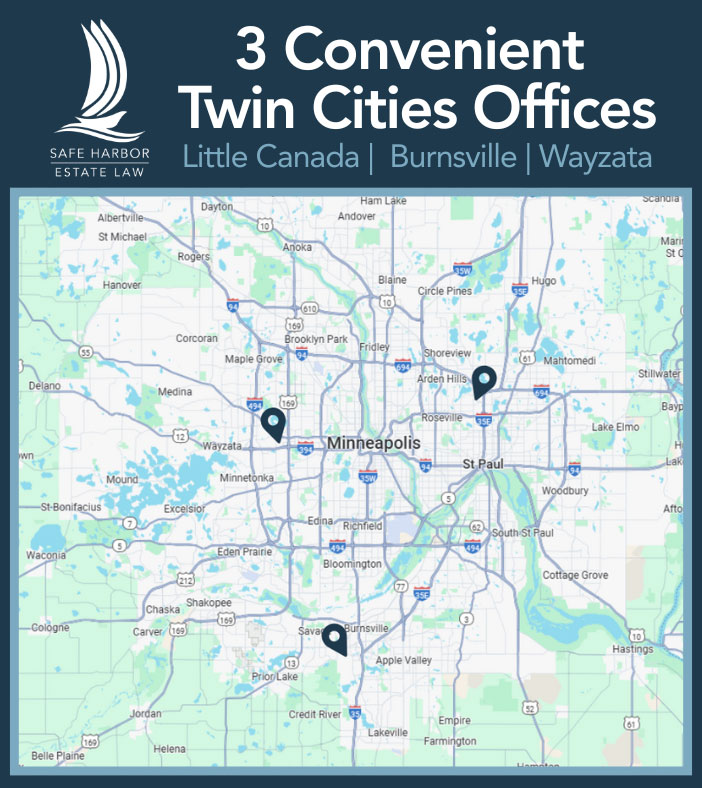
Safe Harbor Estate Law serves families throughout Saint Paul, Burnsville, Wayzata, and the surrounding Twin Cities area, as well as clients across Minnesota and in Wisconsin.
Our team is here to answer your questions, explain your choices, and help you build a plan that protects the people and assets you care about most.
If you are serious about saving, schedule a confidential 90 minute legacy planning session or call us on 612-445-3208.
This post is for general informational purposes only and does not constitute legal advice. Laws and Medicaid limits change regularly. Please verify current figures at mn.gov/dhs or speak with a licensed Minnesota elder law attorney. Results may vary based on individual circumstances.
Author Bio

Margaret Barrett is the Founder and Owner of Safe Harbor Estate Law, a Saint Paul, MN, estate planning law firm she founded in 2013. With almost 15 years of combined experience in litigation and Minnesota estate law, she is dedicated to representing clients in a wide range of estate law matters. Her practice areas include estate planning, asset protection, elder law, and more.
Margaret received her Juris Doctor from the William Mitchell College of Law and is a member of the Minnesota State Bar Association and the Ramsey County Bar Association.