Nursing Home Costs in Minnesota in 2026: What Families Need to Know

Few families are prepared for nursing home costs in Minnesota in 2026. When a loved one needs nursing home care, the financial questions often become just as overwhelming as the medical ones. Understanding what long-term care is and what options you have early can make a significant difference in protecting what you’ve worked so hard to build.
Long-term care in Minnesota costs, on average, between $10,281 and $12,805 per month in 2026, depending on whether your loved one is in a semi-private or private room. That works out to $123,000 to $153,000 per year for a standard nursing home, and some Minnesota families are paying over $200,000 per year for memory care or specialized nursing facilities.
Assisted living costs vary widely but commonly run $48,000 to $84,000 per year, with memory care units often reaching $90,000 to $100,000 or more. Most families are not prepared for bills that large.
The good news is that the earlier you begin with the right legal planning, you may be able to protect a significant portion of your family’s assets before you spend all of your hard-earned assets on care costs.
What Does Nursing Home Care Cost in Minnesota in 2026?
Minnesota nursing home costs are above the national average. Here is a breakdown of what families are currently seeing:
Average Monthly Costs
| Room Type | Average Monthly Cost |
| Semi-private room | $10,281 |
| Private room | $12,805 |
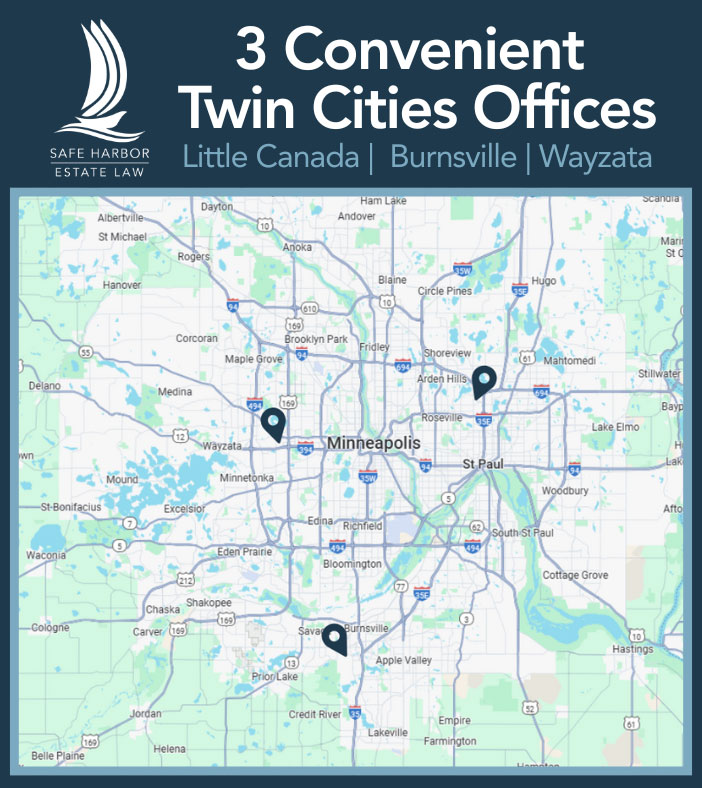
Note: Costs vary by region. Facilities in the Twin Cities metro area tend to fall on the higher end of the range, including communities served by our offices in Burnsville, Wayzata, and Saint Paul.
Why do nursing home costs vary so much?
Several factors can push your loved one’s nursing home bill higher than the averages above:
- Level of medical care required — skilled nursing, physical therapy, and memory care each add to the base rate
- Location — metro area facilities typically charge more than rural ones
- Room type — private rooms cost roughly 25% more than semi-private
- Length of stay — the average nursing home stay in the U.S. is approximately 2.5 years
- Additional services — speech therapy, specialty diets, and extra activities may be billed separately
Who Pays for Nursing Home Care in Minnesota?
This is the question most families ask first. The short answer: if no planning has been done, you will have to pay out of pocket until your assets are down to $3,000 for a single person and $165,660 for a married couple if there is one healthy spouse.
Medicare
Medicare will cover nursing home care only in limited situations. It covers the first 20 days in full after a qualifying hospital stay of at least three days. From day 21 through day 100, a daily copayment of $217 applies. After day 100, Medicare stops paying altogether.
Medicare does not cover long-term custodial care, which is the kind of ongoing daily assistance most nursing home residents need.
Medicaid (Medical Assistance in Minnesota)
Medicaid, called Medical Assistance (MA) in Minnesota, is the primary public program that covers long-term nursing home care. But qualifying is not easy.
2026 Minnesota Medicaid asset limits for nursing home care:
- Single applicant: $3,000 or less in countable assets
- Married couple (both applying): $6,000 combined
- Married couple (one spouse applying): The applicant spouse is limited to $3,000; the community spouse may keep up to $162,660
Income limits (effective July 2025 through June 2026):
- Single applicant: $1,305 per month or less
- Recipients keep only $132 per month as a personal needs allowance, the rest goes toward the cost of care
Retirement accounts, bank accounts, stocks, and bonds count as assets. You can keep a home only if you or your spouse is living in it (there is a very limited child caregiver exception), though Minnesota limits home equity to $752,000 in 2026. The state will also put a lien on your house to recover the cost of care when the house is sold. This is called estate recovery. Safe Harbor’s planning can minimize the Estate Recovery financial burden.
Long-Term Care Insurance
Long-term care insurance was seen as a proactive and responsible way to plan for the future, particularly to cover the rising costs of nursing home care and long-term care services for aging adults. However, some of these insurance companies are facing a class-action lawsuit alleging the company prioritized profits over people, delaying or denying claims and trying to recoup financial losses at the expense of policyholders who were counting on their coverage when they needed it most.
Private Pay
If your assets are above the Medicaid limits, you will be expected to spend down until you qualify. For a family with $300,000 in savings, that could mean spending $10,000 or more per month on care before Medicaid steps in. You also have to watch out for the 5-year lookback rule.
What Is the 5-Year Lookback Rule, and Why Does It Matter?
One of the biggest surprises for families is something called the “5-year lookback.” Simply put, when someone applies for Medicaid, the state looks back five years to see whether assets were given away or transferred below market value.
If they were, it will delay eligibility for benefits by imposing a penalty period Minnesota Statutes, Section 256B.0595
This is one of the most common areas of confusion we help families navigate every day. Many assume they can simply give money to their children, pay their expenses, or move assets to a family member.
In most cases, that “strategy” will result in a denial of Medicaid coverage and a penalty period. You could be evicted from the care facility if your children do not pay for your care during the penalty period.
What this means practically:
- The 5-year lookback applies to both nursing home Medicaid and the Elderly Waiver program for care in your home or assisted living or memory care facility.
- It’s best to plan more than 5 years before you expect to need care
- Certain legal tools, like Medicaid compliant annuities, irrevocable trusts, may allow you to move assets outside of Medicaid’s reach, but only if structured properly by an elder law attorney who regularly provides Medicaid planning and application. It is a very complicated area of law.
The attorneys at Safe Harbor Estate Law in Burnsville, Wayzata, and Saint Paul, MN provide Medicaid planning for hundreds of families across Minnesota and Wisconsin every year.
Only 5% of estate attorneys focus on Medicaid planning as part of their practice, and it is important to find one that uses all the Medicaid planning tools in the toolchest.
Safe Harbor is honored to be the only law firm in Minnesota to receive the Krause Gold Partner Award for protecting more client assets with Medicaid Compliant Annuities than any other Minnesota firm in 2024 and 2025.
We helped our clients save over 5 million dollars in 2025 with Medicaid-compliant annuities alone (savings of at least $10,815 to $431,665 per client).
Our Lead Asset Protection Attorney Michael Teeter contributed to drafting the legal brief in the 2021 Minnesota Court of Appeals case that gave Minnesotans the right to use irrevocable trusts for Medicaid planning purposes in Minnesota.
Our team has helped hundreds of Minnesota and Wisconsin families navigate these decisions and identify solutions that fit their unique circumstances.
What this means for your family: Every situation is different, which is why personalized legal advice is so important before making financial decisions.
Learn more about Medicaid Asset Protection Planning.
Can You Protect Your Assets Before Entering a Nursing Home?
Yes, in many cases you can, but timing matters enormously. We routinely help clients protect 40-80% of the assets they would otherwise be required to spend down to qualify for Medicaid long-term care.
Options That May Help
Medicaid-Compliant Annuities
These specialized annuities allow one spouse to transfer assets to another and retain the status of deferred taxation on retirement assets.
They also cover gifts made in the past or made proactively to protect assets that would otherwise need to be spent down on care. In some cases, the gift can include a cabin or farm and require that you have trusted persons to receive the gift.
The calculations and details involved in planning and executing an annuity plan are very complex and require an elder law attorney experienced with Medicaid and Medicaid-compliant annuities to quarterback the process.
Irrevocable Trusts
Placing assets into a properly structured Medicaid Asset Protection Trust may allow those assets to fall outside Medicaid’s countable asset rules after the 5-year lookback period has passed.
This approach requires careful legal drafting and works best when started years before care is needed. Minnesota’s rules on MAPT’s are more strict than other states, so a careful evaluation from an experienced Medicaid Asset Protection Trust Attorney is needed to see if this tool will help you meet your goals.
Spousal Protections
If one spouse needs long-term care and the other does not, the community spouse resource allowance allows the healthy spouse to keep up to $162,660 in assets (2026 limit).
A minimum monthly income allowance of $2,645 per month may also be protected for the community spouse. Your custom Medicaid Asset Protection plan will allow for additional funds protected for the healthy spouse.
That plan may include a will or trust that allows some assets to pass to your children rather than all assets passing to the surviving spouse as a Medicaid asset protection strategy.
Asset Spend-Down with Strategy
Spending down assets strategically on exempt items, home modifications, a vehicle, or prepaid funeral arrangements, burial arrangements for family, or payments for care may help a family qualify for Medicaid more quickly without losing everything. It is important to consult with a Medicaid elder law attorney before spenddown to ensure that the particular Medicaid rules are followed.
What this means for your family: Planning early can preserve significantly more options than waiting until a health crisis occurs.
Frequently Asked Questions About Nursing Home Costs
How much does a nursing home cost per month in Minnesota in 2026?
The average monthly cost is $10,281 for a semi-private room and $12,805 for a private room. Costs vary by location, facility, and care level. See the cost breakdown above for more detail.
Does Medicare pay for nursing home care in Minnesota?
Medicare only covers nursing home care for a limited time after a qualifying hospital stay, up to 100 days, with a copayment after day 20. It does not cover long-term custodial care. See the Medicare section above for the full breakdown. Medicaid is the primary government payer for long term care.
How can I protect my assets from nursing home costs in Minnesota?
There are many legal tools and dozens of strategies that a Medicaid elder lawyer can customize to protect your assets. These strategies work best when started well before a health crisis. See the planning options section above, or speak with a experienced Medicaid elder law attorney who uses all the planning tools about your specific situation.
What is the Medicaid asset limit for nursing homes in Minnesota?
In 2026, a single applicant must have $3,000 or less in countable assets to qualify. For a married couple where one spouse is applying, the community spouse may keep up to $162,660. See the Medicaid section above for income limits and additional details.
What is a Medicaid Compliant Annuity and can it help protect my assets?
A Medicaid Compliant Annuity can convert countable assets into an income stream that complies with Medicaid rules, potentially protecting wealth that would otherwise need to be spent down. In the right situation it can also address past gifts that might otherwise trigger a penalty period. Safe Harbor is the only firm in Minnesota to receive the Krause Gold Partner Award for protecting more client assets with Medicaid Compliant Annuities than any other Minnesota firm in both 2024 and 2025.
Is it too late to protect assets if my spouse is already in a nursing home?
Not necessarily. While early planning provides the most options, Medicaid Compliant Annuities and other strategies can still be effective after a care crisis has begun. Many families assume it is too late and give up assets they did not have to lose. Speaking with an elder law attorney as soon as possible gives your family the best chance.
The Best Time to Plan Is Before You Need a Nursing Home
The families who protect the most are the ones who plan early.
Planning more than 5 years ahead provides you with maximum options.
If you have fewer than 5 years, or you are already paying for care, we routinely help clients save significant amounts in spite of the 5-year lookback.
If you are serious about saving, schedule a confidential 90 minute legacy planning session at a Safe Harbor Estate Law office throughout the Twin Cities, in Saint Paul, Burnsville or Wayzata.
We have served thousands of clients across Minnesota with over 75 years of combined attorney experience. Our team has a major focus on Medicaid planning and application, Medicaid-compliant annuities, and elder law. We are here to guide you through the process with clear, honest answers.
Every family’s situation is different, and there is no one-size-fits-all solution. If you’re wondering what options may be available to protect your assets or care for a loved one, our team is here to answer your questions and help you understand your next steps.
This post is for general informational purposes only and does not constitute legal advice. Laws and Medicaid limits change regularly. Please verify current figures at mn.gov/dhs or speak with a licensed Minnesota elder law attorney. Results may vary based on individual circumstances.
Author Bio

Margaret Barrett is the Founder and Owner of Safe Harbor Estate Law, a Saint Paul, MN, estate planning law firm she founded in 2013. With almost 15 years of combined experience in litigation and Minnesota estate law, she is dedicated to representing clients in a wide range of estate law matters. Her practice areas include estate planning, asset protection, elder law, and more.
Margaret received her Juris Doctor from the William Mitchell College of Law and is a member of the Minnesota State Bar Association and the Ramsey County Bar Association.